
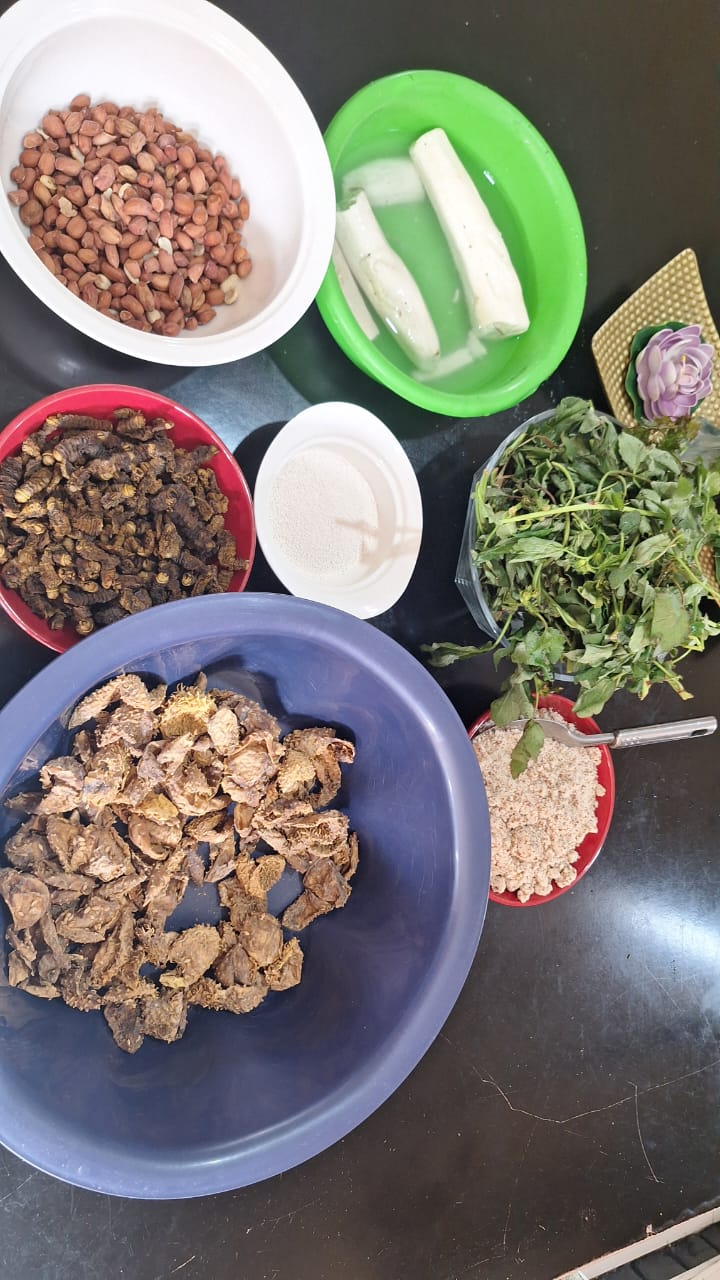
Ifinkubala, Makolobwa, and Lumanda — the relishes that remind us who we are.
There is a kind of meal that does not need introduction. You know it the moment you walk into the house — the warm, earthy smell of nshima on the fire, the sharp tang of fermented greens, the quiet sizzle of a relish coming together. It is a meal that speaks before anyone says a word. It is Zambian food in its purest form.
This is the kind of spread that appeared on a table recently and stopped everyone in their tracks: ifinkubala (dried caterpillars), makolobwa (dried Cucumis metuliferus, also known as Horned Melon), and lumanda (a traditional sour leaf vegetable), all served alongside a mound of smooth, hot nshima. Simple. Nutritious. Deeply Zambian.
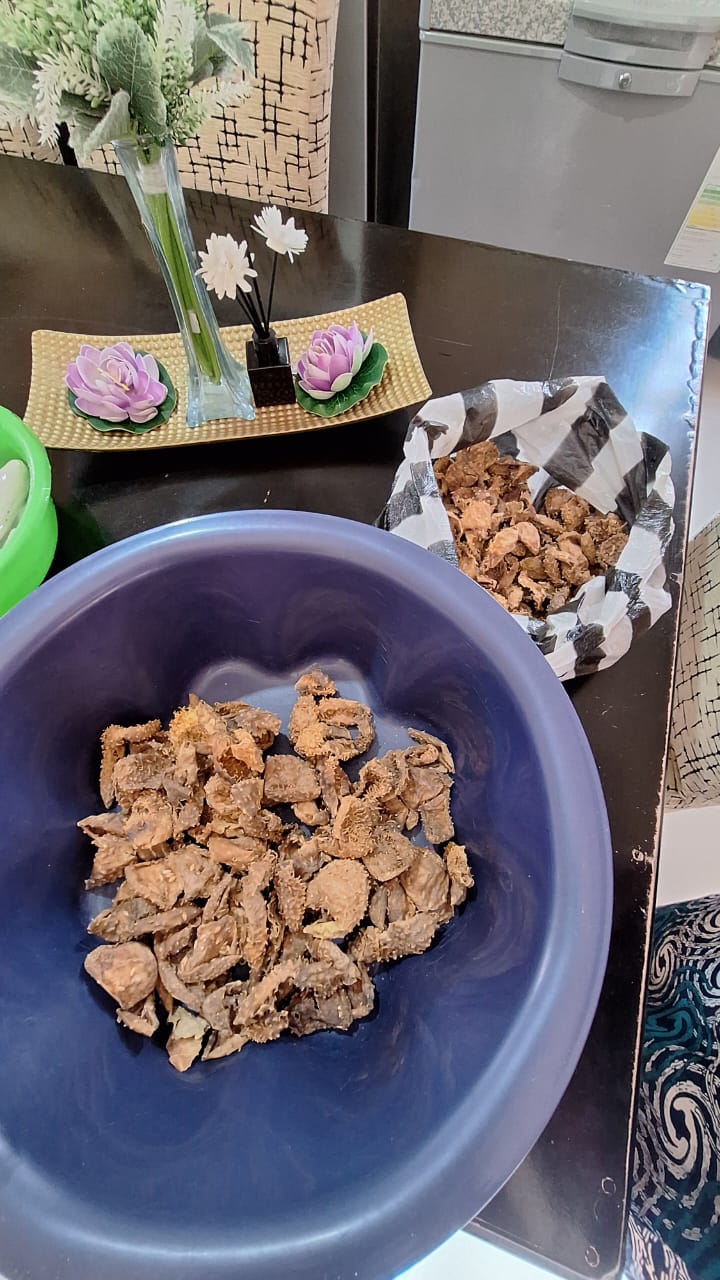
Dried Cucumis metuliferus (Horned Melon) sorted and ready for the pot.
Nshima: The Anchor of Every Meal
No Zambian meal makes sense without nshima. Made from finely ground white maize meal, it is cooked with water into a thick, smooth porridge — then worked over the heat until it reaches that characteristic stiff, moldable consistency that every Zambian knows by feel. You roll a small piece in your palm, press a hollow into it with your thumb, and use it to scoop your relish. That is not just technique. That is culture.
Nshima is the quiet anchor of this meal — present on every table, patient while the relishes take their bows, essential to every bite. It is carbohydrate and comfort in equal measure.
The Supporting Cast: Cassava and Groundnuts
Behind every great Zambian meal are the quiet staples that round it out. Cassava, peeled and soaked in water, is a starchy companion to nshima — sometimes served boiled on its own, sometimes dried and ground into flour for a different take on the main dish. Groundnuts, meanwhile, are the meal's secret weapon: roasted and eaten whole as a side, or pounded into a fine powder to thicken and enrich relishes. Together, they add depth, texture, and protein to a spread that already has no shortage of flavour.
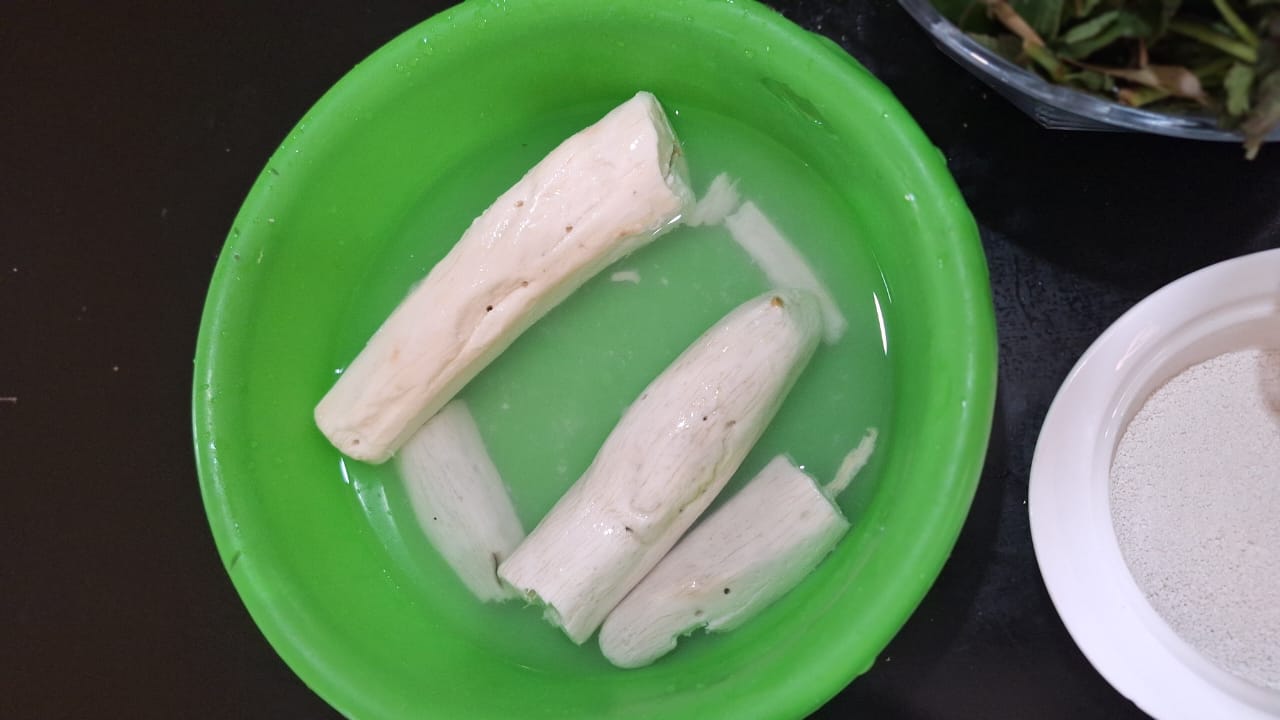
Fresh cassava soaking, a traditional accompaniment.
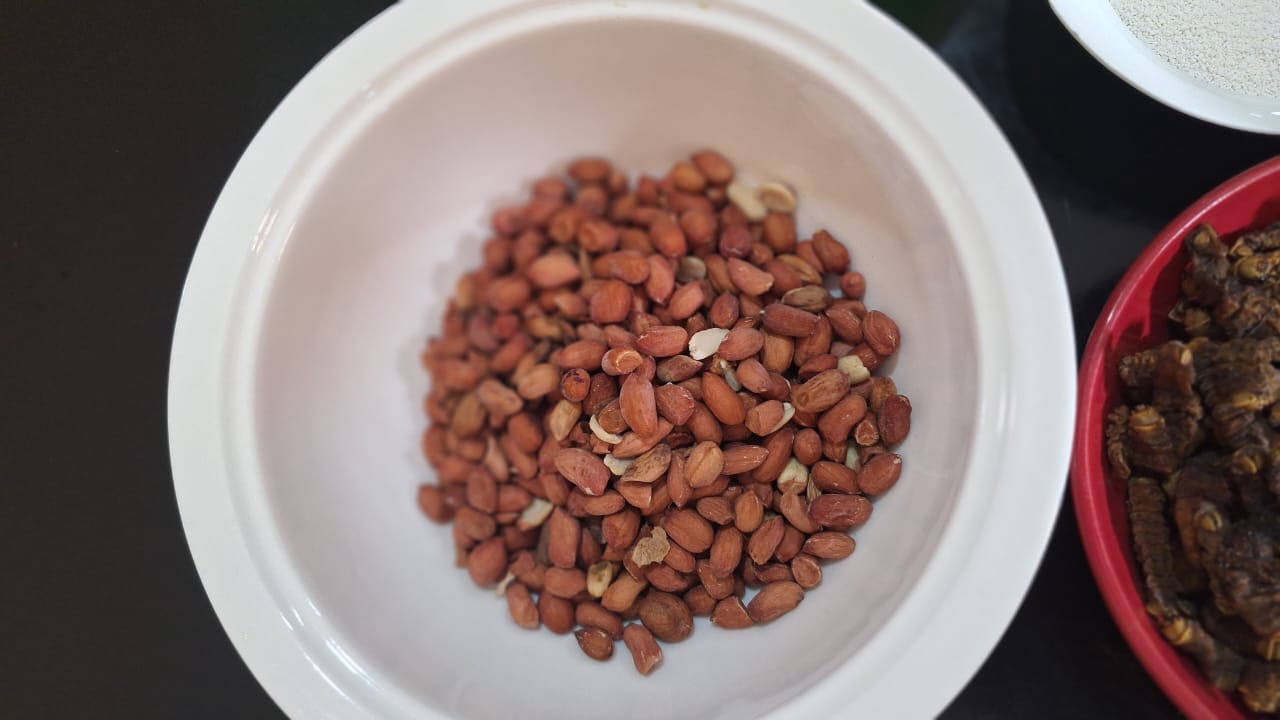
Groundnuts — roasted and ready to complement the meal.
Ifinkubala: The Relish That Surprises
For anyone who grew up in Zambia — especially in the Copperbelt or Eastern regions — ifinkubala needs no explanation. Dried and salted caterpillars, most commonly from the mopane tree, are one of the country's most beloved traditional relishes. They are harvested seasonally, sun-dried or smoked, and then fried with onion and tomato until they are tender and flavourful.
What surprises people who try them for the first time is how satisfying they are — meaty and slightly smoky, with a texture that holds up well against the softness of nshima. They are also remarkably nutritious: high in protein, iron, and healthy fats. In a world increasingly interested in sustainable food sources, ifinkubala has quietly been ahead of the curve for generations.
"In a world increasingly interested in sustainable food, ifinkubala has quietly been ahead of the curve for generations." — Majory Lupiya
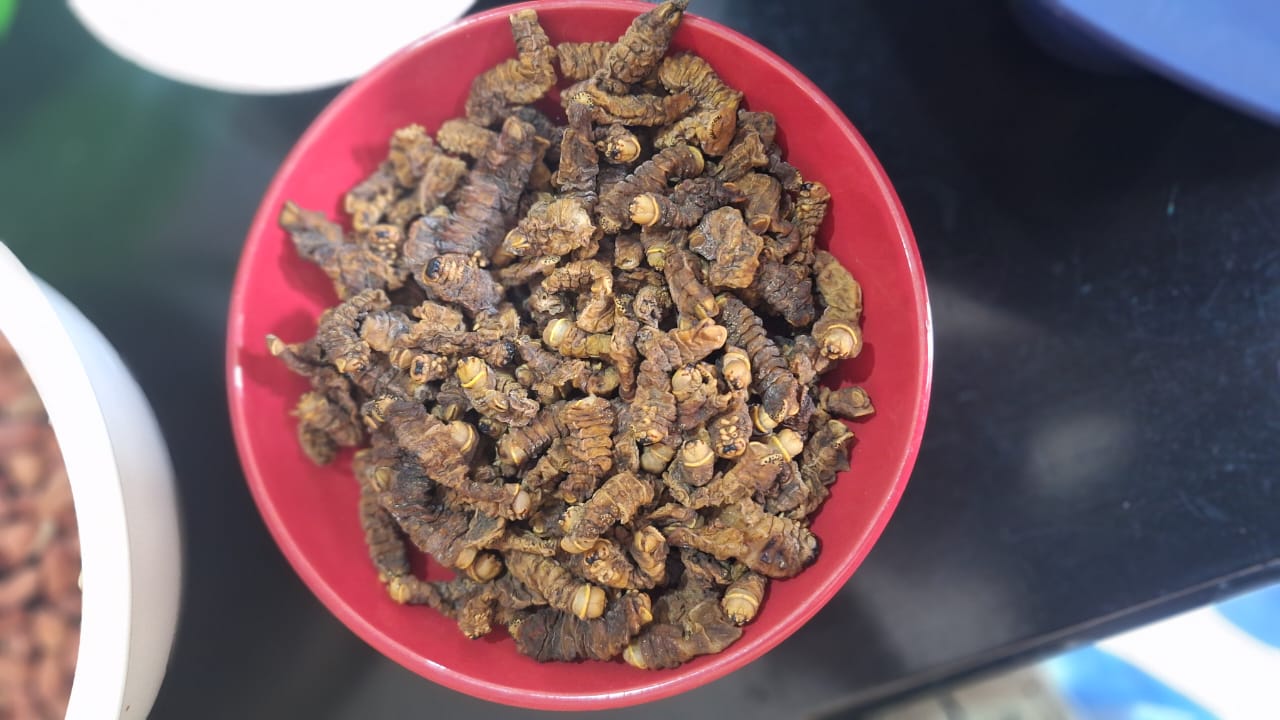
Ifinkubala — high in protein, iron, and healthy fats.
Makolobwa: Dried Horned Melon Done Right
Makolobwa — dried Cucumis metuliferus, commonly known as Horned Melon — are one of those ingredients that appear humble on the surface but reward patience. Soaked and slow-cooked until soft, they are typically prepared with tomato, and onion. The result is a thick, earthy stew that pairs beautifully with nshima, offering nutrition and flavour in every spoonful.
Makolobwa has fed generations of Zambian families, especially in rural communities where it serves as a reliable, affordable source of nutrition year-round. It is the kind of food that does not ask for attention, yet quietly carries the meal.
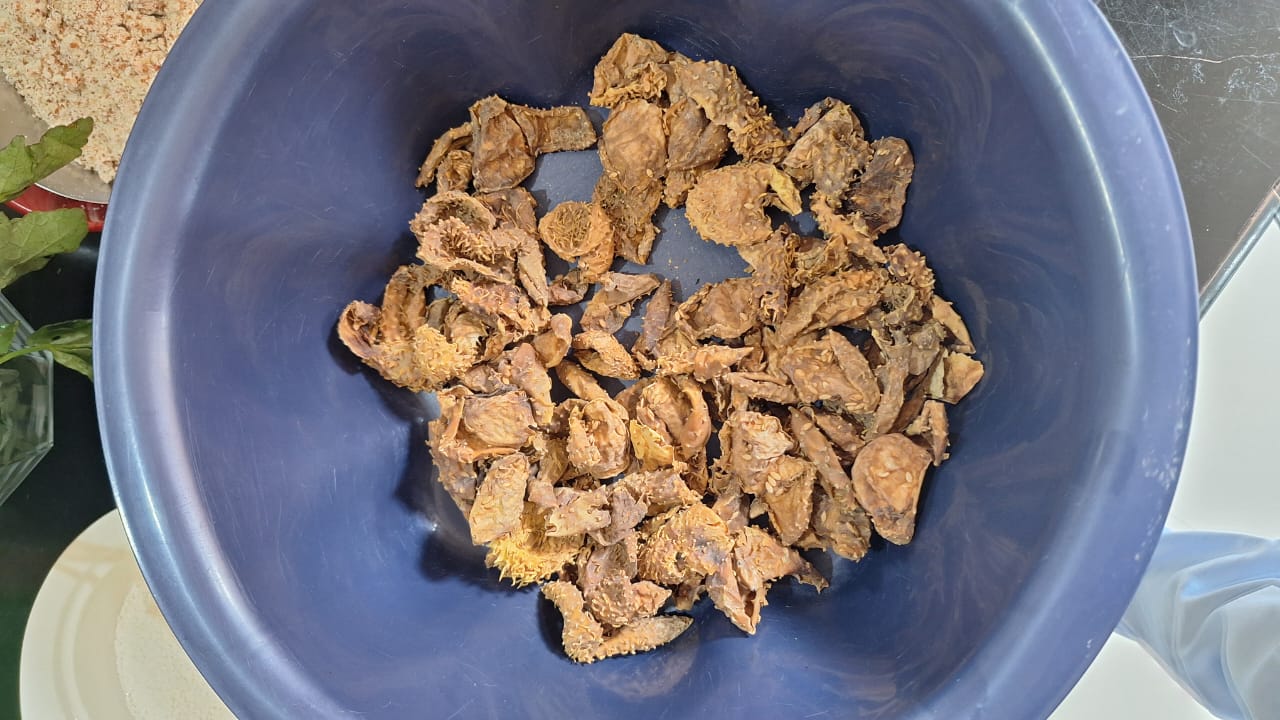
Dried Cucumis metuliferus (Horned Melon) sorted and ready for the pot.
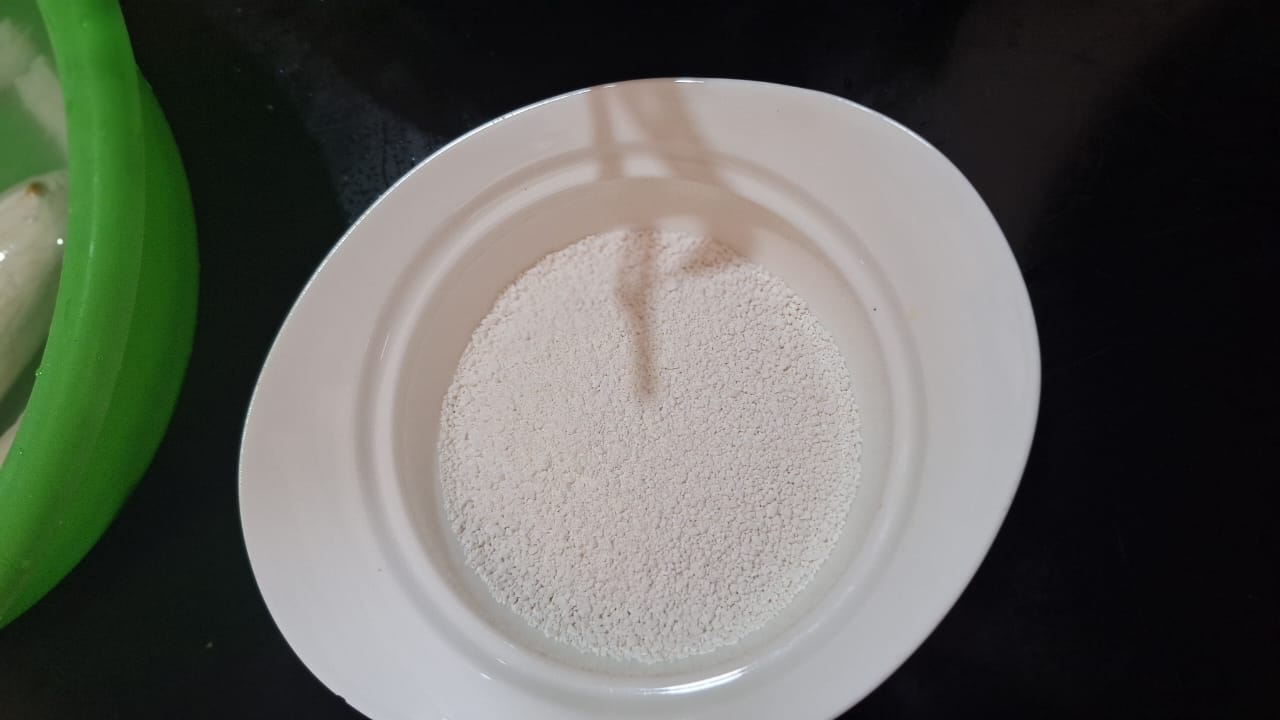
Bicarbonate of soda — used to soften makolobwa during cooking.
Lumanda: The Sour Note That Ties It Together
Lumanda is the dish that brings a bright, fermented sourness to the spread — a counterpoint to the richness of ifinkubala and the earthiness of makolobwa. Made from the leaves of the roselle plant (sometimes called sorrel), lumanda is typically cooked with bicarbonate of soda to soften the leaves, and prepared with tomato and onion.
It has a tartness that wakes up the palate and cuts through heavier flavours — and it is packed with vitamins and antioxidants. For those who grew up eating it, lumanda carries a specific kind of nostalgia: it tastes like someone's grandmother's kitchen, like a Sunday meal, like home.
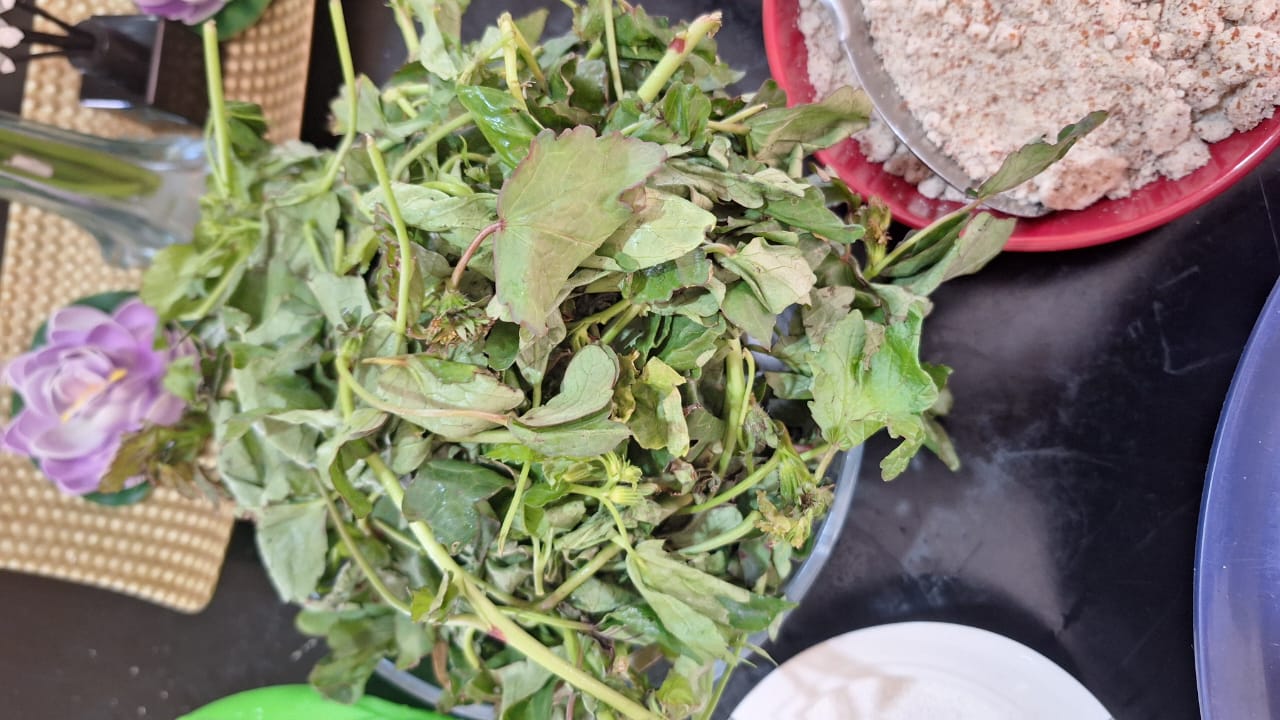
Fresh lumanda leaves — bright, tart, and full of vitamins.
Bicarbonate of soda — used to soften lumanda leaves during cooking.
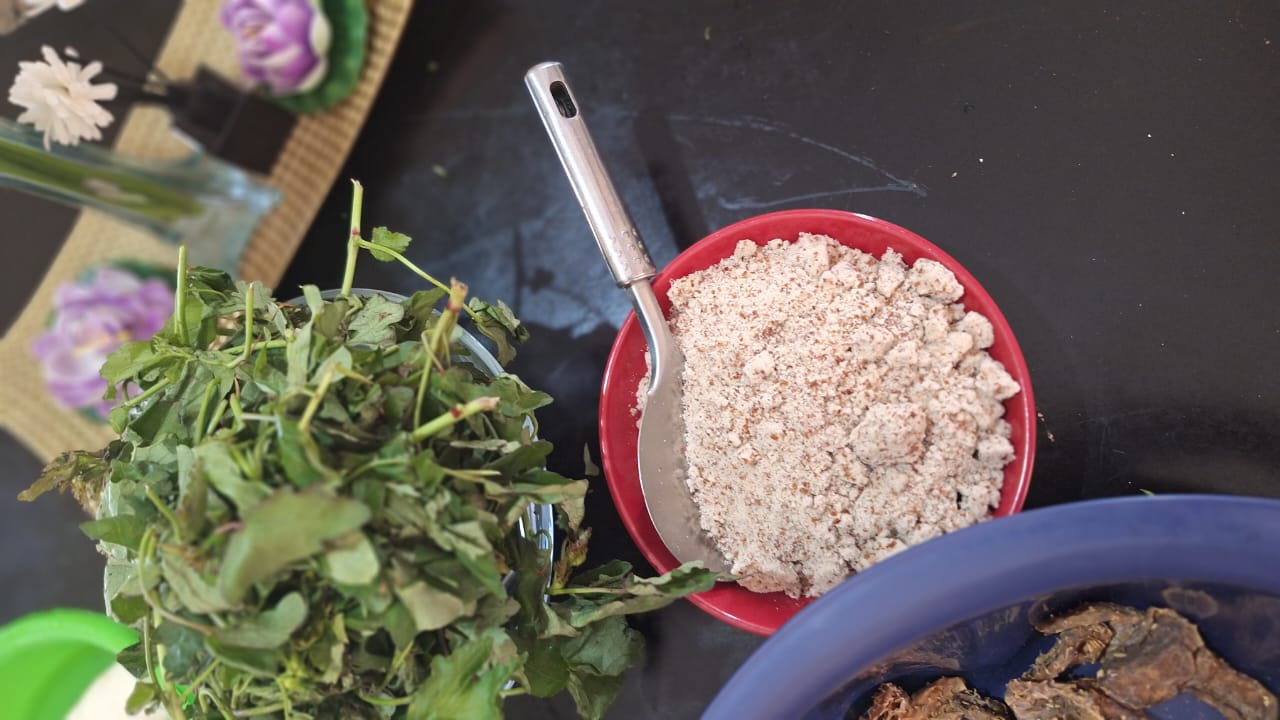
Lumanda and groundnut powder, ready for the kitchen.
Why This Meal Matters
At a time when fast food is everywhere and imported ingredients fill more and more Zambian kitchens, a spread like this is a quiet act of pride. It says: our food is enough. It is more than enough.
These are not just ingredients — they are stories. Ifinkubala carries the memory of forest harvests and childhood treats. Makolobwa holds the knowledge of grandmothers who knew how to stretch a meal without losing its soul. Lumanda connects us to a tradition of preserving and fermenting that long predates any modern food trend. And nshima, as always, holds it all together.
Simple. Nutritious. Proudly Zambian. The best meals are the ones that tell a story of where we come from — and this one tells it beautifully.